
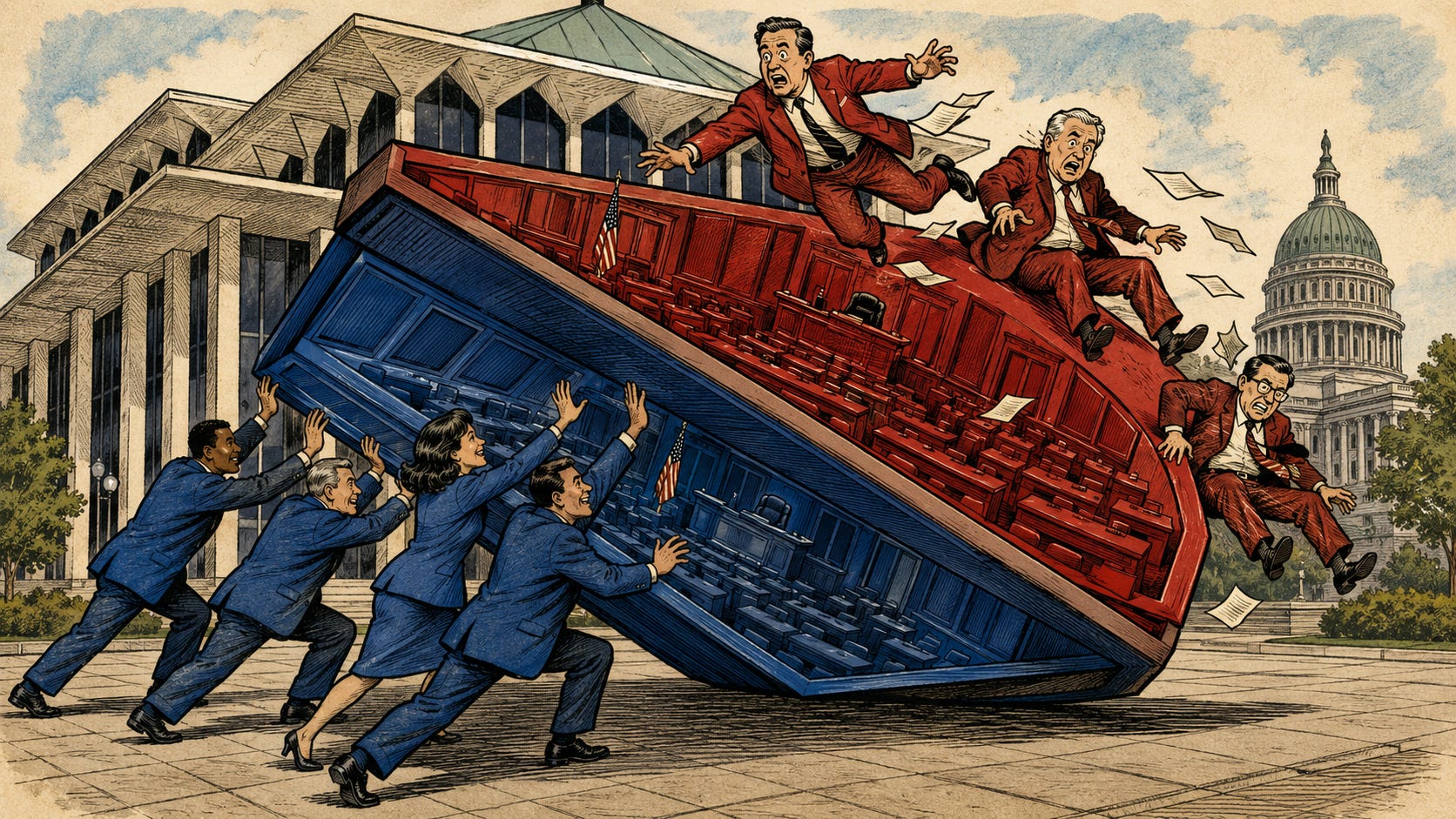
Republican donors are apparently getting nervous about Democrats flipping the N.C. House.
That’s not completely irrational, but it’s also worth remembering that the prospect of upheaval is often a fundraising strategy. Republican fundraisers want donors scared, because fear raises money. Democratic fundraisers want activists excited, because hope raises money. So you’re going to hear a lot about a possible Democratic House majority over the next few months.
In fact, it’s already started. WUNC just published a piece laying out how the flip could happen.
My view is simple: Republicans are going to lose seats, maybe more than they want to admit. I think there will be at least a loss or two that makes you do a double-take. But Democrats are still a step short of taking the chamber.
Sure, it is theoretically possible. Democrats would need a net gain of 12 seats, and there are enough toss-up and “lean Republican” districts based on the John Locke Foundation’s gold-standard Civitas Partisan Index to make that possible.
But getting from possible to probable is a long walk. That result would far exceed the nine seats Democrats flipped in 2018, the last “blue wave” year in North Carolina.
Some of the dynamics are similar: Republican president, midterm electorate, Trump not on the ballot, Roy Cooper helping Democrats, and so on.
The map is different now. In 2018, Republicans still held a lot of suburban Charlotte seats and similar districts that have since gone permanently blue. There are not as many easy pickups left.
There is a 1994 echo here, though. That year, Republicans took the N.C. House for the first time in more than a century. They did not become the permanent majority overnight, but the win changed expectations, built a bench and helped set up the next era of state politics.
A Democratic flip in 2026 could work the same way in reverse. Republicans would probably have a chance to regroup before redistricting after the 2030 census, but losing the chamber would still reshape Raleigh for at least one cycle.
I do not think it comes to that.
The best Republican incumbents in tough districts have spent the last few years giving voters a reason to know them beyond the “R” next to their names. Rep. Tricia Cotham has a hard race, but she should be considered a slight favorite in a true toss-up district. Reps. Mike Schietzelt, Erin Paré, Allen Chesser and Jonathan Almond have done the same. They are vulnerable because of their districts, but they are not generic.
The problem is that some others might be.
I’ll be honest: There are incumbent House Republicans on the competitive list who I have never heard of. Maybe that says more about me than them. But if I follow this stuff for a living and your name barely registers, swing voters may not have a firm view of you either.
That is a dangerous place to be in a midterm like this.
The last thing you want to be in a blue wave year is a generic Republican.
At a premium

In the paper
Pat McCrory has spent nearly a decade in political exile, but a new poll suggests Republican voters may not have written him off as much as Raleigh assumed. In my newspaper column last week, I argued the next Republican governor won’t be Pat McCrory, but may need more of his focus on jobs, executive competence and statewide vision than the General Assembly wants to admit.
Read it here, free with gift link: Republicans wrote off Pat McCrory. Not so fast, a new poll says
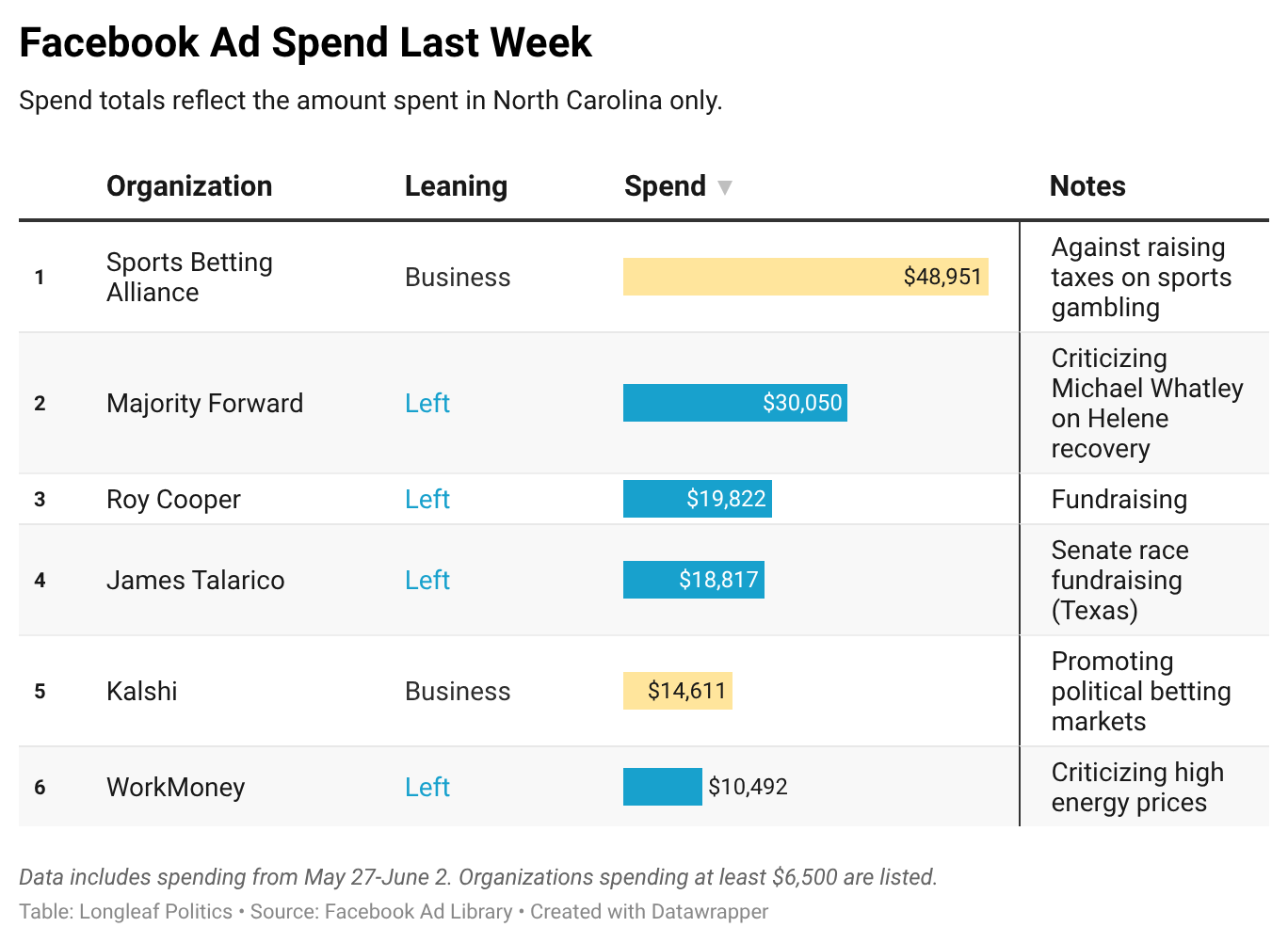
Top spenders on social media
Anyone seen what's happening in California?
I wouldn't put anything past the Democrats.