
There’s perhaps no bigger political story in the country right now than the meteoric rise to prominence of the Democratic Socialists of America. What seemed to start as a New York City novelty a year ago has become a dominant force across the nation.
My newspaper column this week traced its spread across North Carolina. You can read it here, free with gift link: Socialism is growing in North Carolina. Don’t dismiss it
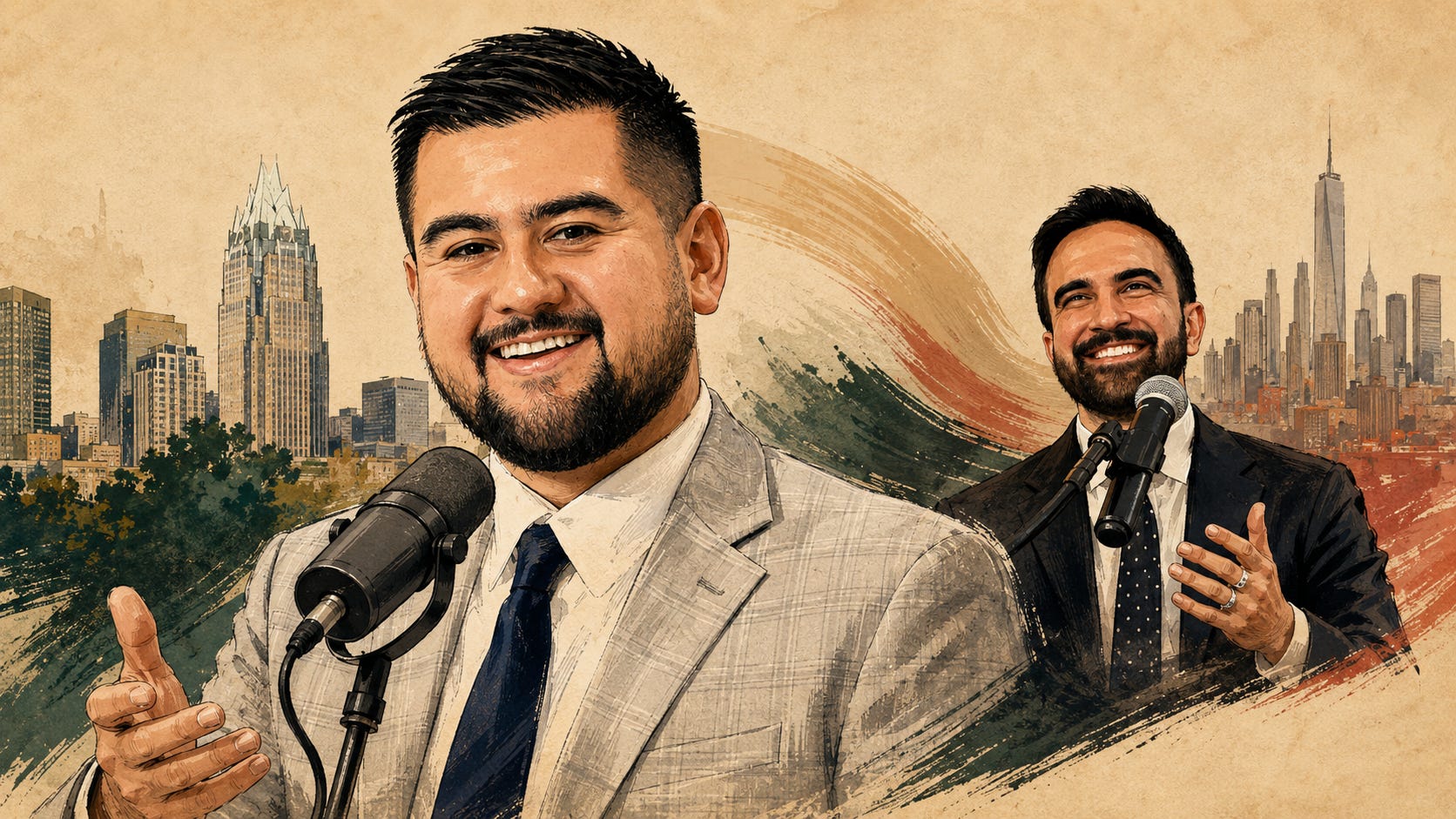
As I was putting the column together, I interviewed JD Mazuera Arias, a 27-year-old first-term Charlotte city councilman who considers himself part of the DSA, though he’s careful to attach plenty of caveats to that description.
Not nearly enough of our conversation made it into the column, so I wanted to share more of it here.
We’ll start with the end. As we wrapped up, Arias joked about people who know his politics but have never met him: “I always tell everybody who has heard of me but hasn’t spoken to me yet, ‘I’m not that scary, aren’t I?’”
And he’s not.
Arias comes across as eminently reasonable, with the rare political talent to talk about issues in terms nearly everybody would agree with. He does not spend much time defending socialism in the abstract, talking instead about housing costs, stagnant wages and the economic insecurity many people feel despite living in a booming city.
That combination can be politically formidable. Like former Gov. Roy Cooper, he is temperamentally moderate while pretty progressive on policy.
Republican attacks built around the word “socialist” work best when the target looks and sounds like a caricature. Wisconsin gubernatorial candidate Francesca Hong fit that mold. Arias does not.
“I think if we spend all of our time debating whether the word socialism or the momentum of democratic socialism as scary, we miss the more interesting story,” Arias told me. “Why are more young people and working people open to these ideas? Why are people questioning who benefits from Charlotte’s growth?”
I agree. That is the more interesting story. When I listen to New York City Mayor Zohran Mamdani speak and when I listen to Arias, I start to understand why people are attracted to democratic socialism.
The policies may be socialist, but the pitch is populist. And that makes Democratic Socialism part of a political story that reaches far beyond its membership.
The system is rigged
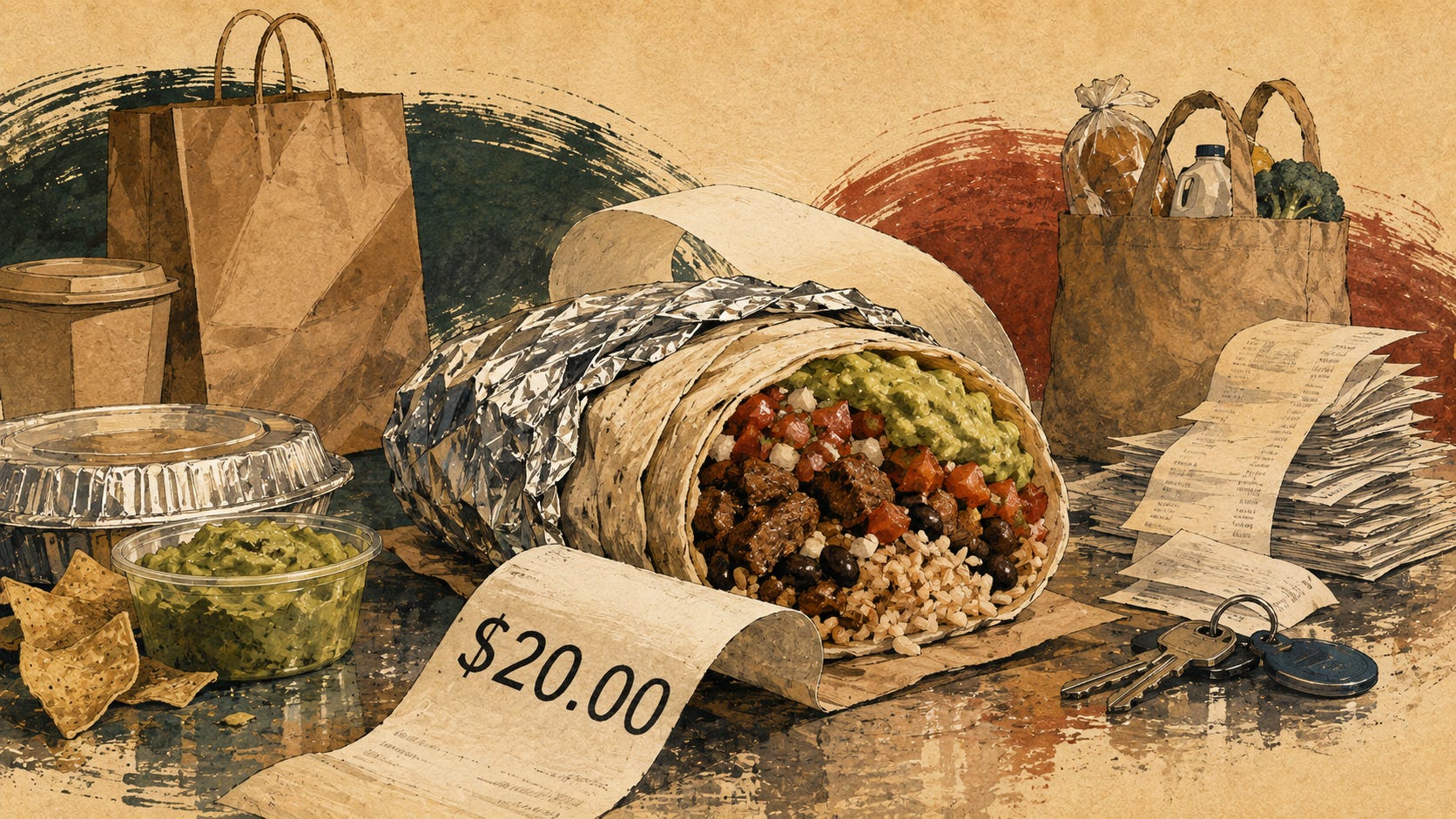
I don’t know how online you are, but if you spend any time on conservative X, you probably heard about the $20 burrito debate a few weeks ago. It even made The New York Times.
The whole thing began when a Turning Point USA spokesman shared a college student’s lament that a burrito simply should not cost $20.
The right then spent several days arguing over whether this was evidence of an affordability crisis or simply a young person who needed to make better decisions. One camp — you could call them traditional conservatives — advised the gripers to order something cheaper, cook at home and stop treating the price of premium takeout as evidence that capitalism had failed.
The other camp, primarily postliberal conservatives, said the literal burrito was beside the point. Food, housing and other essentials have become unaffordable, in their view, especially for younger Americans. Telling them to eat ramen does not answer their broader sense that the economy no longer works for them.
While I’m associating all these viewpoints with modern labels, none of these ideas are particularly new. The Tea Party, Trumpism and Democratic Socialism look very different, but they all start with essentially the same populist complaint: Powerful people have rigged the system against you.
The Tea Party directed its anger at bailouts, runaway spending and a government that protected the politically connected. Trump blamed corrupt elites, global institutions and leaders who sold out American workers. Democratic Socialists blame corporations, billionaires and capitalism itself.
Different villains, same basic populist message. The “system” is keeping you down.
The appeal of soft socialism
The Tea Party answer was to get government out of the way and return power to individuals. Trump-style populism is much more willing to use government through tariffs, immigration restrictions and other forms of economic nationalism to (in theory) protect American workers and industries.
Postliberals also reject the limited-government consensus. Many embrace versions of “common-good conservatism” in which government actively shapes markets and institutions to support families, workers and a healthy social order.
On the left, Mamdani and Arias offer different versions of what I would call “soft socialism.” Mamdani’s agenda is more sweeping, but both see government, labor organizing and collective action as tools for restoring balance and giving ordinary people a larger voice.
“My politics are about balance and power,” Arias told me. “Making sure neither government nor corporations become so powerful that ordinary people lose their voice and their ability to live a decent life. And I think democratic socialism is answering the call.”
And that's the clever part. Arias isn't asking voters to choose between capitalism and a Marxist state. He is asking whether corporations have become too powerful and whether government should do more to restore the balance.
Those are not inherently socialist questions. The socialism comes in the answers.
The danger is that “balance” can become a one-way ratchet. Every market failure becomes a reason to transfer more authority to government, while government failure rarely leads that authority to be returned. Weakening a powerful corporation does not necessarily empower an individual. Sometimes it merely replaces one distant and unaccountable institution with another.
You don't have to own a DSA membership card to think your health insurance company is screwing you. And once a politician convinces you that he understands the problem, he has a head start in selling you the solution.
Who’s in control?
To get a little philosophical, the deeper argument is between an internal and an external locus of control. Basically, whether you believe your life is shaped mostly by your own choices or by forces outside your control.
Obviously, the answer is some of both, but I don’t think it is healthy — politically or personally — to spend too much time telling people that the most important forces in their lives are the ones they have no say in.
I think of it as a version of Pascal’s Wager. If you believe you have control over your life and you’re right, you have a chance to do something with it. And if you’re wrong — if the forces arrayed against you really are that powerful — you’re no worse off for having tried.
That is ultimately where I disagree with Mamdani and Arias and economic populism more broadly. They put more faith than I do in government and collective action as ways to rebalance economic power. There is something corrosive about a politics that continually tells people to look outward for the explanation for their lives.
But I am impressed by their political approach. That is why I have come to think of Arias as Charlotte’s Mamdani. Like New York’s mayor, he is young, likable and unusually gifted at making democratic socialism sound practical and reasonable. I am not persuaded by the product, but I recognize the skill of the salesman.
The broader point is that conservatives can make fun of government-run grocery stores and the like all they want (I do it, too). But voters worried about their grocery bills will eventually choose a flawed plan over a punchline.
Soft socialism will not be defeated by calling it socialism. It will take a better answer to the problems that made it attractive in the first place.
At a premium

Question of the week
Nearly half of you (a clear plurality) agreed with me last week that the thing Republicans most need in North Carolina is a renewed policy agenda.
I agree that conservative attacks on socialists just by simplistic ridicule doesn't work, at least not with a young generation feeling the effects of the 2008 collapse and the bailouts of the banking system. But there is an alternative to the hollow socialist vs. capitalist debate. In fact if you follow closely what Scott Bessent, J.D. Vance, Trade Representative Greer, and indeed President Trump have been saying and doing, they are reviving the American System of Alexander Hamilton, which worked very well when it was applied, by such presidents as Lincoln and McKinley, and even Franklin Roosevelt, to a significant degree. Private enterprise is absolutely the basis of our economy, but the government plays a critical role in encouraging the direction of developments, including specific industries, like semiconductors or shipbuilding today. Making sure credit is available for productive activity, not so much for financial speculation is crucial. The problem is that, until Trump, this school of economic practice has been deliberately suppressed and virtually written out of our history books, largely thanks to British influence.