
I was in downtown Raleigh this past week for a book signing event. Thank you to everyone who came out to support The Change Agent, and especially to the Downtown Raleigh GOP Club for hosting me.
Quite a few people in the room had worked on Gov. Pat McCrory’s 2012 campaign or served in his administration. It’s slightly unnerving to promote a political history book to people who lived through the chapters, but it also makes for much more interesting conversations.
That campaign was unlike anything North Carolina had seen, before or since. McCrory took on the Jones Street status quo head-on and, after decades of one-party Democratic rule, promised to bring a new sense of purpose to state government.
Those conversations have me thinking less about this November than about the election four years from now.
The 2030 election will coincide with the Census, which means the legislators elected that fall will draw North Carolina’s congressional and legislative districts for the decade that follows. It could be more consequential than 2026 and 2028 combined.
I still think Republicans are more likely than not to retain sizable majorities in both chambers this year. But the state House is competitive enough that Democrats could pick up seats, and it is not difficult to imagine them chipping away again in 2028. The majority may survive both elections while becoming steadily more vulnerable by the time the truly important one arrives.
North Carolina Democrats held power for more than a century before the whole thing finally grew stale enough for voters to revolt. Republicans are not entitled to the same grace period.
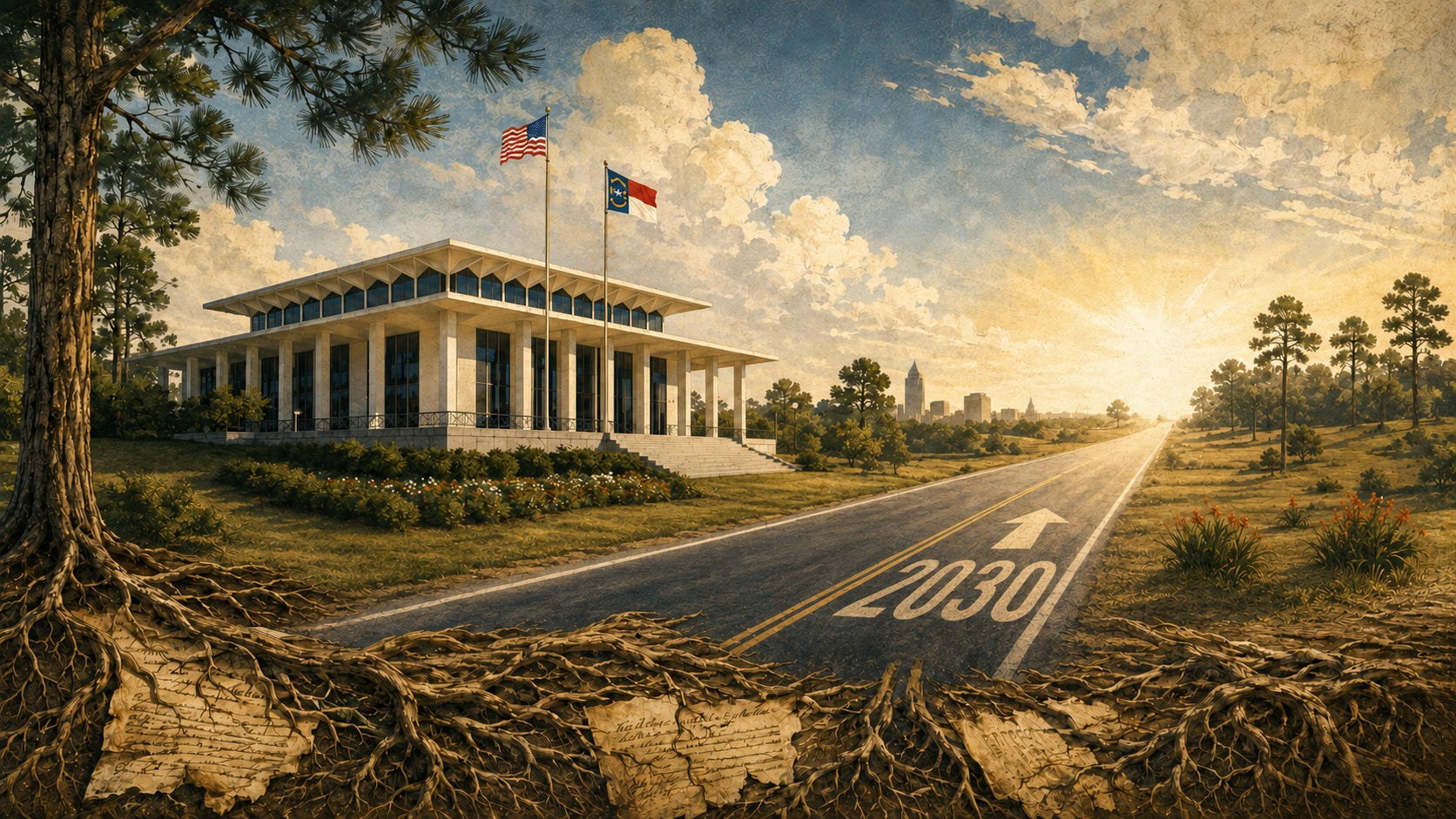
Some house cleaning
Things genuinely improved after the old Democratic regime ended. The first decade of Republican governance had a clear direction centered on making North Carolina more competitive and fiscally sound. There were plenty of disagreements, but it was easy to understand what Republicans were trying to accomplish.
This second decade has felt less directed. The Republican agenda has become moribund, too often reduced to keeping North Carolina “on the track” that made it the best place to live, work and raise a family. That is a strong record to defend, but it cannot substitute forever for an account of what comes next.
I raised this concern in a column last year, and I can’t say much has changed. That is not for lack of good people. The General Assembly is full of lawmakers who sincerely want to serve North Carolina and move it forward.
It is always fashionable to blame legislative leaders, and I still believe those positions should come with term limits. But House Speaker Destin Hall is the man for the job. The challenge is bigger than any one leader, and the necessary house cleaning does not require throwing out the many good people already there. It means clearing away the habits that accumulate when a party has been in power for a long time.
In that sense, North Carolina Republicans may need another campaign in the spirit of 2012 — one willing to confront the corruption of entrenched power in Raleigh.
I don’t mean corruption in the cash-in-an-envelope sense. I mean what happens when preserving power begins to take the place of using it with purpose. Eventually, winning the next election becomes the agenda.
This concern is not mine alone. An excellent recent State Affairs profile describes how disappointed State Rep. John Blust was when Republicans took control of the General Assembly and did not govern as differently as he had expected.
Blust supports a single-subject requirement that would make it harder to slip unrelated policy into budgets and conference reports without proper scrutiny. I’m on board.
The standard rebuttal is that Democrats did the same things when they were in charge. That is true, and they would almost certainly do it again if they returned to power. Why give them the opportunity?
‘A frequent recurrence to fundamental principles’
Near the end of the profile, State Affairs highlights one of the finest lines in the North Carolina Constitution:
“A frequent recurrence to fundamental principles is absolutely necessary to preserve the blessings of liberty.”
I love that phrase, “frequent recurrence.” Returning to fundamental principles does not mean freezing the Republican agenda in 2013. It means continually asking what conservative leadership requires in a changing state.
To that end, Republicans should revive the idea of the 1994 “Contract with North Carolina.” Every two years, legislative candidates tell voters in plain English what they intend to accomplish if returned to office. Starting in 2026 and doing it again in 2028 would help the party arrive at 2030 with a real argument about North Carolina’s future.
That is part of what I want Longleaf Politics to do, help figure out what comes next for conservatism in North Carolina. The first decade gave Republicans a strong record to run on. By 2030, they will also need an agenda.
The party that is corrupt is the one to go after entrenched corruption? How does this make sense?
The NC GOP got handed a huge gift in how Democrats stood down in response to COVID which kneecapped them in 2020 and echoed to 2022 and that NC Dems had a leadership vacuum didn't help either. I don't see them making the same mistake in 2030 especially if they claw back anything before then.